A productive garden rarely happens by accident.
One of the biggest lessons new gardeners discover is that planting the right crop at the right time can make a much bigger difference than simply buying more seeds or adding more fertiliser. Plants have different preferences for temperature, daylight, moisture, and growing conditions. A vegetable that thrives in cool spring weather may struggle when planted during the hottest part of summer, while another may barely grow until the soil becomes warm.
Seasonal planting helps you work with those natural conditions instead of fighting them.
The exact planting calendar depends on where you live, your local climate, frost dates, soil type, and whether you are growing in the ground, raised beds, containers, or a greenhouse. The seasons in this guide are therefore a practical framework rather than a fixed calendar. Always check local growing recommendations for your area before planting large quantities.
With a little planning, you can keep your garden productive across much of the year while improving soil health and making better use of your available space.
Why Seasonal Planting Matters
Plants are living organisms with specific growing requirements.
Some vegetables prefer cool temperatures. Others need warm soil to germinate and grow properly. Certain crops can tolerate light frost, while others can be badly damaged by even a short period of cold.
Planting at the wrong time can lead to slow germination, weak growth, pest problems, bolting, poor fruit production, or plants that struggle before they have established themselves.
Seasonal planting also makes it easier to plan succession crops.
For example, when an early crop finishes, you can replace it with something suited to the next part of the growing season rather than leaving the soil unused.


Start With Your Local Growing Conditions
Before choosing what to plant, understand your garden.
Your climate is more important than a generic gardening calendar found online.
Check Your Frost Dates
If your area experiences frost, find out approximately when the final spring frost normally occurs and when the first autumn frost is expected.
Warm-season crops such as tomatoes, peppers, and many types of beans generally need warmer conditions than cool-season vegetables.
Observe Sunlight
Spend a day observing where sunlight reaches your garden.
Most vegetables need several hours of direct sunlight to produce well, although some leafy crops can tolerate less.
Do not assume that a sunny garden in the morning stays sunny all afternoon.
Nearby walls, trees, fences, and buildings can create shade as the sun moves.
Understand Your Soil
Healthy soil provides plants with physical support, water, air, and nutrients.
Check whether your soil is sandy, clay-heavy, compacted, or reasonably loose and well-drained.
A simple soil test can provide useful information about pH and nutrient levels.
What to Plant in Spring
Spring is often one of the most exciting gardening seasons.
As temperatures rise and daylight increases, many plants can be started or transplanted. However, spring conditions can change quickly, so timing matters.
Cool-season vegetables are usually a good starting point where local conditions allow.
Depending on your climate, possible choices include lettuce, peas, radishes, spinach, carrots, onions, potatoes, and some brassicas such as broccoli and cabbage.
Warm-season crops can be introduced later when the soil and air are consistently warm enough.
These may include tomatoes, peppers, cucumbers, courgettes, beans, and other heat-loving plants.


Plant Leafy Greens Early
Leafy greens can be useful spring crops because many prefer cooler conditions.
Lettuce, spinach, and similar vegetables can often be harvested relatively quickly compared with crops that require an entire growing season.
Instead of planting everything at once, consider sowing small amounts at intervals.
This can provide a more continuous harvest rather than producing far more vegetables than your household can eat at one time.
Spring Gardening Tip
Protect young plants from sudden cold when necessary.
Do not assume that because the calendar says spring, every night will be warm enough for tender seedlings.
Weather matters more than the date printed on the calendar.
Plant Root Vegetables for a Useful Harvest
Carrots, radishes, beetroot, and similar crops can be valuable additions to a productive garden.
Radishes are particularly useful for beginners because they can mature relatively quickly under suitable conditions.
Carrots usually require more patience.
Loose, reasonably deep soil helps root crops develop more evenly.
Avoid compacting the soil around them.
If your soil is heavy or difficult to work, consider a raised bed or suitable container rather than forcing root vegetables into poor growing conditions.


Move Into Summer Crops
Summer is when warm-season crops can take centre stage in many gardens.
When temperatures and soil conditions are suitable, you can grow crops such as tomatoes, peppers, cucumbers, courgettes, aubergines, beans, and various herbs.
These plants generally benefit from warmth and sufficient sunlight.
However, hot weather also creates challenges.
Water can evaporate quickly.
Plants in containers can dry out particularly fast.
Some vegetables may stop producing well during extreme heat.
Plant Tomatoes in the Right Conditions
Tomatoes are popular because a healthy plant can provide a rewarding harvest.
They generally need plenty of sunlight, suitable soil, consistent moisture, and support as they grow.
Avoid planting them in a location where they will remain waterlogged.
When transplanting, handle young plants carefully and give them enough space for air movement.
Do not crowd tomatoes simply to fit more plants into the garden.
Good spacing can make maintenance easier and may reduce some disease-related problems.


Grow Beans for a Productive Summer Crop
Beans can be an excellent choice when conditions suit them.
Depending on the variety, they may grow as compact plants or climbing vines.
Climbing types require suitable support.
Install the support early rather than waiting until the plants are already large and difficult to manage.
Regular harvesting can encourage continued production in some varieties.
If you are growing beans for the first time, read the seed packet carefully because varieties differ in growth habit and planting requirements.
Give Cucumbers Enough Space
Cucumbers can grow rapidly in warm conditions.
They can spread across the ground or climb a suitable support.
A trellis can help save garden space and keep developing fruit away from the soil.
Cucumbers generally need consistent moisture, particularly while producing fruit.
Avoid allowing the soil to swing repeatedly from extremely dry to saturated conditions.
Water the soil rather than constantly wetting the leaves when practical.


Grow Herbs Alongside Vegetables
Herbs can make a productive garden more useful without requiring a large amount of space.
Basil, parsley, coriander, chives, mint, rosemary, thyme, and other herbs can be grown according to local climate and conditions.
Some herbs prefer full sun and relatively well-drained soil.
Others can tolerate more shade.
Mint is particularly vigorous in many conditions, so growing it in a container can make it easier to control.
Fresh herbs can also be harvested regularly rather than waiting for a single large harvest.
What to Plant in Autumn
Autumn can be an excellent growing period rather than simply the end of the garden year.
As temperatures become cooler, conditions may become suitable again for vegetables that dislike intense summer heat.
Depending on your climate, consider crops such as spinach, lettuce, radishes, carrots, onions, peas, cabbage, broccoli, and other cool-season vegetables.
Autumn is also a useful time to improve soil.
Remove unhealthy plant material.
Add suitable organic matter where appropriate.
Protect the soil from unnecessary disturbance and erosion.


Plant Leafy Greens Again
Many gardeners think of leafy greens as spring crops only.
They can often be useful in autumn as well.
Spinach, lettuce, kale, and other cool-tolerant greens can provide useful harvests when summer vegetables begin to decline.
Check your local climate because some crops may continue growing through cooler periods while others will stop once temperatures fall below their preferred range.
Consider Garlic and Onions
Garlic and some onion varieties can be planted during particular parts of the year depending on local climate.
They need suitable soil and time to develop.
Do not plant them simply because an online calendar says it is the correct month.
Check the recommended planting period for your region and the specific variety.
Good drainage is particularly important because bulbs can suffer when soil remains excessively wet.


Make Use of Winter
Winter gardening depends heavily on climate.
In colder areas, outdoor growth may slow considerably.
In mild climates, however, some vegetables can continue producing.
Cool-tolerant crops may include certain leafy greens, onions, leeks, carrots, peas, and brassicas.
In very cold areas, protective structures such as cold frames, tunnels, or greenhouses can extend the growing season.
The important point is to work with your local conditions rather than expecting summer crops to perform in winter.
Protect Vulnerable Plants
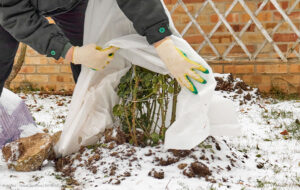
If frost is expected, protect suitable plants with appropriate covers or move containers to a more sheltered location where practical.
Avoid allowing protective coverings to rest heavily against delicate plants.
Remove or adjust covers when conditions become warmer if necessary.
Good ventilation matters in protected growing spaces because excessive humidity can create other problems.


Use Containers for Seasonal Flexibility
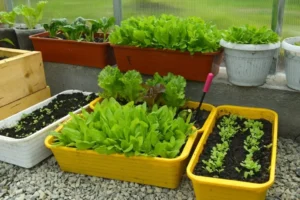
Container gardening can make seasonal planting easier.
You can move containers into sheltered positions during cold weather and adjust their location when sunlight changes.
Containers are particularly useful for herbs, salad leaves, peppers, tomatoes, strawberries, and other plants that suit your local growing conditions.
However, containers dry out faster than many garden beds.
Check them regularly.
Choose containers with drainage holes.
Do not allow excess water to remain trapped around plant roots.
Plan Succession Planting
Succession planting means following one crop with another rather than leaving the same space unused.
For example, you might harvest an early radish crop and then plant a later-season vegetable in the same space.
Another approach is to sow the same crop at intervals.
Instead of planting an entire packet of lettuce seeds in one week, you might sow smaller quantities every couple of weeks when conditions allow.
This can spread your harvest across a longer period.


Rotate Your Crops
Growing the same crop in the same location year after year can contribute to recurring pest and disease problems.
Crop rotation means changing where related crops are planted over time.
You do not need a complicated agricultural plan.
Even a simple rotation can help you avoid repeatedly planting the same plant family in one small bed.
Keep a basic garden notebook showing what you planted and where.
After a few seasons, those notes become extremely useful.
Protect Soil Between Crops
Healthy soil is one of the foundations of a productive garden.
Avoid leaving soil bare unnecessarily.
Depending on your climate and gardening method, you may use mulch, cover crops, compost, or other appropriate approaches to protect the soil.
Organic mulch can help reduce evaporation and suppress some weeds.
However, keep mulch away from plant stems where appropriate and avoid creating persistently wet conditions around sensitive plants.
Water According to the Season
Water requirements change throughout the year.
Hot weather can increase water loss.
Cool, wet weather may reduce the need for additional irrigation.
Do not water automatically just because it is part of your normal routine.
Check the soil and observe the plants.
Water deeply enough for the crop and soil conditions rather than repeatedly wetting only the surface.
Early morning can be a practical time to water many outdoor plants because it gives foliage and soil time to dry as the day progresses.
The best approach still depends on your climate, soil, and crop.
Watch for Seasonal Pests
Different pests become more noticeable under different conditions.
Inspect plants regularly.
Look underneath leaves.
Check new growth.
Look for holes, discolouration, distorted leaves, sticky residue, or other unusual signs.
Early detection gives you more options.
Do not immediately reach for strong pesticides whenever you see an insect.
Some insects are harmless, and others can be beneficial predators.
Identify the problem before deciding how to respond.


Feed Plants Carefully
Fertiliser can be useful when plants need nutrients, but more is not automatically better.
Excess fertiliser can damage plants or create nutrient imbalances.
Start by understanding your soil and crop requirements.
A soil test can be useful when you suspect nutrient problems.
Compost and other organic materials can improve soil structure, but they should also be used appropriately.
Follow product instructions when using packaged fertilisers.
Avoid guessing with large quantities.
Choose Plants You Will Actually Eat
A productive garden is not necessarily the garden with the largest number of plants.
It is the garden that produces something useful to you.
If your household rarely eats radishes, growing a huge bed of them may not be practical.
Instead, focus on vegetables, herbs, and fruits that you genuinely enjoy.
This also makes gardening more rewarding because you can see the results of your work on your plate.


Plant According to Your Available Space
You do not need a huge garden to grow useful crops.
A balcony, patio, small yard, or series of containers can produce herbs, salad leaves, tomatoes, peppers, strawberries, and other suitable plants.
Use vertical growing where appropriate.
Climbing beans and cucumbers can make use of height.
Compact varieties can be useful in containers.
The goal is to match the plant to the available space rather than forcing a large plant into a tiny container.
Keep a Simple Seasonal Garden Calendar
A notebook or digital calendar can help you remember:
- What you planted
- When you planted it
- Where it was planted
- When seedlings appeared
- When harvesting began
- Which varieties performed well
- Which problems appeared
- How much you actually harvested
This information becomes more valuable each year.
Instead of relying entirely on generic planting guides, you gradually build a record based on your own garden.


Common Seasonal Gardening Mistakes
Planting Too Early
Seeds and seedlings can struggle when conditions remain too cold.
Planting Too Late
Some crops need a long growing period and may not mature before cold weather arrives.
Overwatering
Wet soil does not automatically mean healthy plants.
Ignoring Sunlight
A plant placed in unsuitable light may never perform well, regardless of how much fertiliser you add.
Crowding Plants
Too many plants in a small space can increase competition and make maintenance harder.
Following a Calendar Blindly
A planting date that works in one region may be completely unsuitable somewhere else.
Growing More Than You Can Use
A garden can become a source of waste if harvests are consistently larger than your household can consume or preserve.
A Simple Seasonal Planting Strategy
If you are a beginner, do not try to grow everything.
Start with a manageable selection.
Spring
Focus on cool-season vegetables first, then introduce warm-season crops as conditions improve.
Summer
Grow warm-season vegetables, herbs, and fruits suited to your climate.
Autumn
Return to cool-season crops and prepare soil for the coming months.
Winter
Grow cold-tolerant crops where your climate permits and protect vulnerable plants when necessary.
This simple framework can then be adjusted based on your local weather.


Final Thoughts
A healthier and more productive garden begins with timing.
Instead of asking only, “What should I plant?”, ask, “What can grow well here at this time of year?”
That small change in thinking can make gardening easier.
Use spring for crops that appreciate cooler conditions and gradually move toward warm-season plants as temperatures rise. Use summer for heat-loving vegetables and herbs where your climate allows. Take advantage of autumn for another round of cool-season crops, and use winter for suitable cold-tolerant plants or soil preparation.
Most importantly, pay attention to your own garden.
Record what works.
Notice where plants thrive.
Watch how quickly containers dry out.
Learn which crops your household actually uses.
Over time, your garden becomes less dependent on guesswork. You begin to understand its patterns, and seasonal planting becomes a practical routine rather than a complicated task.
A productive garden is built one planting decision at a time.
Frequently Asked Questions
What should I plant first in spring?
Cool-season crops such as lettuce, spinach, peas, radishes, carrots, onions, and suitable brassicas can be good choices where local conditions allow. Warm-season crops should generally wait until temperatures and soil conditions are suitable.
What vegetables are suitable for summer?
Depending on your climate, tomatoes, peppers, cucumbers, beans, courgettes, aubergines, and various herbs can perform well during warm weather.
Can I grow vegetables in autumn?
Yes. Autumn can be an excellent season for cool-season crops such as spinach, lettuce, carrots, radishes, peas, cabbage, and broccoli, depending on local conditions.
Can vegetables grow during winter?
Some cold-tolerant vegetables can continue growing in mild climates. In colder areas, growth may slow significantly, and protective structures may be useful.
How do I know when to plant?
Use local planting recommendations based on your climate, frost dates, soil temperatures, and the specific crop variety. Seed packets can also provide useful information.
Should I plant everything at the beginning of the season?
Not necessarily. Succession planting can spread harvests over a longer period. Small batches planted at intervals may be easier to manage than one very large planting.
Why is crop rotation useful?
Changing where related crops are planted can help reduce the repeated build-up of some pests and diseases and gives you a more organised approach to using garden space.
How often should I water my garden?
There is no single schedule that works for every garden. Check soil moisture, weather, plant type, container size, and local conditions. Hot or windy weather may increase water requirements.
Is fertiliser necessary for a productive garden?
Plants need nutrients, but fertiliser is not automatically necessary in large amounts. Understanding your soil and crop requirements is more useful than applying fertiliser without knowing whether it is needed.
Can I grow vegetables in containers?
Yes. Many vegetables and herbs can grow successfully in containers when they have suitable space, light, soil, drainage, and water. Choose varieties appropriate for container growing where possible.
What is the easiest way to become better at seasonal gardening?
Keep a simple garden record. Write down planting dates, weather conditions, harvest times, problems, and varieties that performed well. Your own observations can become a valuable planting guide for future seasons.
Should I follow an online planting calendar?
Use general calendars as a starting point rather than an absolute rule. Local climate can change planting times considerably, so regional recommendations and actual weather conditions should guide your decisions.