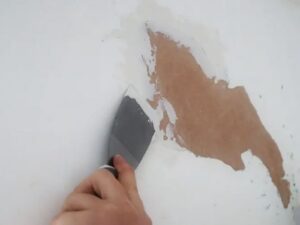
A good DIY repair often starts with choosing the right tool.
It is tempting to grab whatever screwdriver, drill, saw, or wrench happens to be closest and start working. Sometimes that is enough for a very small job. But using the wrong tool can damage the fastener, mark the material, make the repair harder, or even create an unnecessary safety risk.
You do not need a workshop filled with expensive equipment to handle basic home maintenance. A small collection of reliable tools can take care of many everyday jobs, provided you know what each tool is designed to do.
The trick is to choose the tool based on the job, material, fastener, access, and level of force required.
This guide explains how to make that choice, what common tools are best suited to, mistakes beginners often make, and when a DIY repair should be left to a professional.


Start With the Repair, Not the Tool
A common beginner mistake is buying a tool because it looks useful and then trying to find jobs for it.
A better approach is to start with the repair.
Ask yourself what you are actually trying to accomplish.
Are you tightening a screw?
Removing a bolt?
Drilling into a wall?
Cutting a piece of wood?
Measuring a space?
Repairing a loose floorboard?
Hanging a shelf?
Fixing a leaking connection?
Once you understand the task, choosing the correct tool becomes much easier.


Build a Basic DIY Toolbox
You do not need every tool available at the hardware shop.
For ordinary household maintenance, a basic toolbox might include:
- Screwdriver set
- Pliers
- Adjustable wrench
- Claw hammer
- Tape measure
- Spirit level
- Utility knife
- Hex key set
- Drill and suitable bits
- Combination square
- Safety glasses
- Work gloves
The exact contents should depend on the repairs you actually perform.
Someone living in an apartment may need a different selection from someone maintaining a large house with a garden and workshop.
The goal is to own useful tools rather than simply owning many tools.
Choose the Correct Screwdriver
Screwdrivers look simple, but using the wrong one is one of the easiest ways to damage a screw.
Common types include Phillips, slotted, Pozidriv, Torx, and hex drivers.
A screwdriver should fit the fastener properly.
If the tip feels loose inside the screw head, stop and find the correct size or type.
Do not push harder and hope it works.


Why Screwdriver Size Matters
A driver that is too small may slip and damage the screw.
One that is too large may not seat correctly.
Once a screw head becomes damaged, removing it can become much more difficult.
For that reason, matching the driver to the fastener is a small step that can save considerable frustration later.
When to Use a Drill
A drill is one of the most versatile tools in a DIY toolbox.
It can be used for drilling suitable holes, driving compatible screws, and working with different materials when the correct bit is selected.
However, a drill is not automatically the right tool for every job.
For simple screw tightening, a manual screwdriver may provide better control.
For drilling masonry, wood, metal, or other materials, you need the appropriate drill bit and, depending on the material, the appropriate type of drill.


Choose Drill Bits by Material
Drill bits are designed for different materials.
Wood bits are different from masonry bits.
Metal requires an appropriate metal-drilling bit.
Tiles and other hard surfaces may require specialised bits.
Do not assume that one general-purpose bit will perform equally well on everything.
Using the wrong bit can produce poor results and may damage the material or bit.
Choose the Right Hammer
A claw hammer is useful for many basic household jobs, including driving and removing suitable nails and light general work.
But hammers come in different sizes and designs.
A heavy hammer is not automatically better.
For small jobs, a lighter hammer can provide more control.
If you are working with a delicate surface, consider whether a hammer is appropriate at all.
Sometimes a rubber mallet or another suitable tool is better because it can reduce the risk of marking the material.


Use Pliers for Grip and Small Components
Pliers are useful when you need to hold, grip, bend, or manipulate small components.
There are several types.
Slip-joint pliers can handle many general household tasks.
Long-nose pliers are useful when working in narrow spaces.
Locking pliers can hold an item firmly when appropriate.
Do not use ordinary pliers as a substitute for a wrench when tightening nuts.
Pliers can damage the surfaces of fasteners because their jaws are not designed for that purpose.
Use an Adjustable Wrench for Nuts and Bolts
An adjustable wrench is useful because its jaw width can be changed.
This makes it practical for various household nuts and fittings.
However, make sure the jaw fits the fastener snugly.
A loose fit can cause the wrench to slip and round the edges.
For frequently used sizes, a correctly sized fixed wrench or socket can often provide a better fit.


When a Socket Set Is Better
A socket set is particularly useful when you frequently work with nuts and bolts.
The socket surrounds more of the fastener than some open-ended tools, allowing better contact when the size is correct.
If you are assembling furniture, maintaining equipment, or handling repeated bolt-based repairs, a small socket set can be a worthwhile addition to your toolbox.
Do not force a metric socket onto an incompatible fastener or use the wrong size simply because it is close.
Choose the Right Tool for Measuring
Many DIY problems begin with inaccurate measurements.
A tape measure is essential for checking lengths, furniture dimensions, shelf positions, and material sizes.
But the tape measure is not the only measuring tool worth having.
A spirit level helps determine whether something is horizontal or vertical.
A combination square can help with checking angles and marking lines.


Measure Twice
The old advice to measure twice before cutting still has value.
Take the measurement.
Write it down.
Check it again.
Then mark the material.
A few extra seconds can prevent wasted wood, incorrect shelf positions, or unnecessary holes in a wall.
Use a Utility Knife Carefully
A sharp utility knife can be useful for cutting cardboard, opening packaging, trimming suitable materials, and completing certain DIY tasks.
Because the blade is extremely sharp, treat it as a serious cutting tool.
Cut away from your body.
Keep your free hand out of the blade’s path.
Retract or cover the blade when it is not being used.
Replace damaged or dull blades according to the manufacturer’s instructions.
A dull blade can require more force, which may increase the chance of slipping.


Choosing a Saw for Simple Wood Repairs
If you occasionally cut wood, a basic hand saw may be sufficient.
You might use it for suitable timber, trim, shelving, or other small projects.
For more specialised cuts, different saw designs may be appropriate.
A hand saw provides slower but often more controlled cutting.
Power saws can work faster but require more experience and careful handling.
Do not buy a power saw simply because it seems quicker.
For occasional small jobs, the simplest appropriate tool may actually be the better choice.
Choose Sandpaper by the Job
Sandpaper is inexpensive but extremely useful.
Different grades remove material at different rates.
Coarser abrasive paper is generally more suitable for removing material or smoothing rough surfaces.
Finer grades can be useful for finishing and preparing surfaces.
Do not start with an unnecessarily coarse abrasive when working on a delicate surface.
Use gradual steps when necessary.


Select Wall Fixing Tools Carefully
Hanging a picture is different from installing a heavy shelf.
The wall material matters.
You may be working with plasterboard, masonry, brick, concrete, timber, or another construction.
The fixing must match the wall and expected load.
A drill bit suitable for wood will not automatically be suitable for masonry.
Before drilling, consider whether pipes or electrical cables could be behind the intended location.
If you cannot confidently identify the safe drilling area, do not guess.
Choose a Stud Finder When Appropriate
A stud finder can help locate framing members behind some wall surfaces.
It can be useful when you need to attach heavier objects to suitable structural supports.
However, electronic tools are not infallible.
Read the instructions.
Understand what the device can and cannot detect.
Use additional caution around electrical wiring and plumbing.
Do not treat a tool’s reading as an absolute guarantee that a location is safe to drill.


Pick Tools Based on the Material
The material you are working with should strongly influence your choice.
Wood
Wood may require a suitable drill bit, hand saw, screwdriver, clamp, sandpaper, or chisel depending on the job.
Masonry
Brick and concrete usually require appropriate masonry bits and suitable drilling equipment.
Metal
Metal often requires suitable drill bits, cutting tools, and controlled pressure.
Tile
Tile requires specialised care because incorrect tools or excessive force can crack the surface.
Plasterboard
Plasterboard requires suitable fixings and careful drilling.
The same tool may technically work in more than one material, but that does not mean it is the best choice.
Use Clamps When You Need Stability
Clamps are particularly useful for woodworking and repairs where an object needs to stay in position.
Instead of trying to hold a piece with one hand while drilling or cutting with the other, a suitable clamp can provide stability.
This can improve control and make the work easier.
Protect finished surfaces from clamp pressure where appropriate.
Do not overtighten a clamp against delicate material.


Why a Work Light Is a Useful Tool
A good work light is often overlooked.
Poor visibility makes even simple repairs harder.
A portable work light can help when repairing cabinets, working under sinks, inspecting floors, or dealing with poorly lit corners.
Choose a light that allows you to see the work area clearly without creating distracting glare.
Good visibility can help you spot damaged fasteners, cracks, leaks, and other details that might otherwise be missed.
Use a Multimeter Only If You Understand It
A multimeter can measure electrical properties such as voltage, depending on the model and setup.
It is a useful instrument for people who have appropriate electrical knowledge.
It is not a substitute for understanding electrical safety.
Do not experiment with household electrical systems simply because you own a multimeter.
If you are not trained or confident with electrical work, leave fixed electrical repairs to a qualified professional.
Choose a Level for Shelves and Frames
A spirit level is inexpensive and useful for many visual improvements.
Use it when installing:
- Shelves
- Pictures
- Curtain hardware
- Cabinets
- Wall-mounted accessories
- Furniture components
A few degrees of tilt can be surprisingly noticeable once you step back.
Check the level before making permanent holes.


Think About Access Before Choosing a Tool
Sometimes the biggest problem is not the fastener but the available space.
A full-size screwdriver may not fit behind a cabinet.
A standard wrench may be too long for a confined area.
A short driver, ratchet, extension, or appropriately sized tool may provide better access.
Before forcing a tool into a tight space, stop and consider whether another tool would allow you to work more safely.
Buy Quality Where It Matters
You do not need the most expensive tools.
However, extremely cheap tools can sometimes have poor fit, weak construction, uncomfortable handles, or inaccurate measurements.
Prioritise quality for tools you expect to use regularly.
For occasional specialist jobs, renting or borrowing a suitable tool may make more financial sense than buying equipment that will sit unused.
Manual Tools vs Power Tools
Manual tools are often ideal for small repairs.
They are quieter, easier to control, and do not require batteries or power outlets.
Power tools are useful when you need to drill, cut, sand, or perform repetitive work more quickly.
For a beginner, start with manual tools where practical.
Once you understand the task and regularly encounter jobs that would benefit from power equipment, consider adding a suitable power tool.


Common Tool-Selection Mistakes
Using Pliers on Every Nut
Pliers can damage fasteners when used incorrectly. Use a suitable wrench or socket when possible.
Using the Wrong Screwdriver
A poor fit can damage the screw head and make removal difficult.
Choosing the Biggest Tool
Bigger does not mean better. The correct size often gives better control.
Using One Drill Bit for Everything
Different materials require different bits.
Ignoring Measurements
Small measurement errors can create expensive mistakes.
Using Power Tools Too Quickly
Speed is not always an advantage. Beginners can often achieve better results by starting with a simpler manual tool.
Forgetting Safety Equipment
Eye protection is particularly important when drilling, cutting, grinding, or performing tasks that may produce dust or flying debris.
A Simple Tool-Selection Checklist
Before starting a repair, ask yourself:
- What exactly am I repairing?
- What material am I working with?
- What type of fastener is involved?
- How much force is required?
- Do I need to cut, drill, tighten, measure, grip, or sand?
- Is there enough working space?
- Could pipes or cables be hidden nearby?
- Do I have the correct tool and accessory?
- Do I need protective equipment?
- Is this genuinely a DIY job I can complete safely?
These questions take less than a minute and can prevent many avoidable mistakes.


When the Right Tool Is Not Enough
Having the correct tool does not automatically make a repair safe.
Some tasks require specialist knowledge, qualifications, or equipment.
Electrical installation, gas work, significant structural repairs, major plumbing problems, roofing work at dangerous heights, and repairs involving hazardous materials may require professional assistance.
There is no shame in stopping when a job moves beyond your experience.
Knowing your limits is part of being a capable DIYer.
How to Look After Your Tools
Tools last longer when they are stored and maintained properly.
Clean them after use.
Keep cutting tools protected.
Store metal tools somewhere reasonably dry to reduce corrosion.
Replace damaged components when appropriate.
Keep drill bits organised so you can quickly find the correct type and size.
A tidy toolbox also makes DIY work easier because you spend less time searching for equipment.


Final Thoughts
Choosing the right DIY tool is less about owning a huge collection and more about understanding the job in front of you.
A screwdriver should match the fastener. A drill should have the correct bit for the material. A wrench should fit the nut properly. A saw should suit the material and cut. A measuring tool should be used before you start cutting or drilling.
Most importantly, choose tools based on control rather than speed.
When you use the correct tool, many small household repairs become easier, cleaner, and more predictable. You also reduce the temptation to force a tool into a job for which it was never designed.
Start with a small collection of dependable basics. Learn how each tool works. Keep them organised. Add specialist equipment only when your projects genuinely require it.
Over time, that approach can turn a basic toolbox into one of the most useful resources in your home.
Frequently Asked Questions
What are the most important DIY tools for beginners?
A screwdriver set, pliers, adjustable wrench, claw hammer, tape measure, spirit level, utility knife, hex keys, drill, suitable drill bits, and basic safety equipment are useful starting points.
How do I know which screwdriver to use?
Match the screwdriver tip to the shape and size of the screw head. It should fit securely without excessive movement.
Do I need a power drill for basic home repairs?
Not necessarily. Many small repairs can be completed with manual tools. A drill becomes useful when you regularly need to make holes or drive multiple screws.
Can I use the same drill bit for wood and masonry?
It is better to use a bit designed for the specific material. Wood and masonry have different properties and generally require different bit designs.
What is the best tool for tightening nuts?
A correctly sized wrench or socket is generally preferable. An adjustable wrench is convenient for various sizes, but a properly sized fixed tool can provide a better fit.
Why is a spirit level useful?
It helps you install shelves, frames, cabinets, and other items horizontally or vertically rather than relying on visual judgment.
Should beginners buy expensive tools?
Not necessarily. Look for dependable tools with good fit and construction. You can gradually upgrade tools as you learn which ones you use most.
Are power tools better than manual tools?
Neither is automatically better. Manual tools often provide excellent control for small jobs, while power tools can make repetitive or demanding tasks faster.
What safety equipment should I use for DIY work?
Safety equipment depends on the task. Eye protection is useful for drilling, cutting, and other jobs that may create flying debris. Gloves may be appropriate for certain tasks, while hearing or respiratory protection may be needed for specific work.
How do I choose the right wall drill bit?
Identify the wall material first. Masonry, wood, and other surfaces require different types of bits. Follow the drill and bit manufacturer’s guidance.
Should I buy specialist tools for one project?
If you are unlikely to use the tool again, consider borrowing or renting a suitable tool when practical. Buying makes more sense when you expect repeated use.
When should I stop a DIY repair?
Stop when you encounter a hazard you cannot confidently manage, discover significant structural or water damage, encounter fixed electrical or gas work, or realise that the repair requires specialist knowledge or equipment.